


Marsh Electronics operates as a distributor of electronic components for the North American industrial market. We stock and source electronic components, including thermal management hardware, for heavy-duty manufacturing, commercial vehicles, military, and industrial applications. As industrial systems grow more powerful and compact, heat generation directly threatens reliability and equipment lifespan. Design engineers working in punishing environments like energy extraction, agriculture, and military applications require robust thermal management strategies. This guide covers airflow selection, ingress protection ratings, and CFM calculations, the core variables in any thermal management decision.
Choosing Your Airflow: Axial Fans vs. Blowers for Industrial Cooling
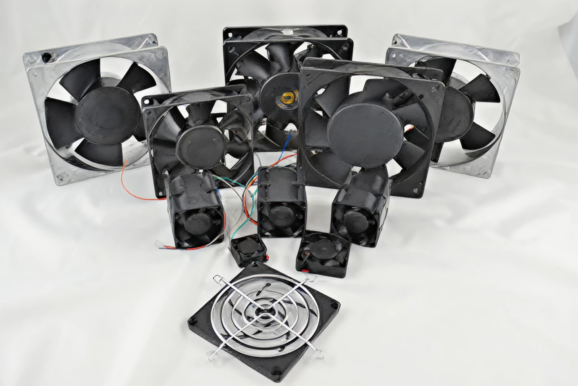
Choosing between an axial fan and a centrifugal blower is one of the first decisions in any forced-air cooling design, and it directly affects whether the system manages heat effectively under load. Design teams must evaluate operational differences and select the correct mechanism for their specific system architecture. Pushing air through a system involves matching the fan’s aerodynamic output to the enclosure’s physical resistance.
These units draw air straight through the housing parallel to the rotating shaft. The rotating blades generate aerodynamic lift to propel the air forward in a straight line. They move high volumes of air with low power draw in open or low-resistance enclosures. Engineers deploy them to cool open enclosures, ventilate large server racks, and extract heat from uncrowded circuit boards. Axial models consume less power and produce lower acoustic noise levels than other technologies.
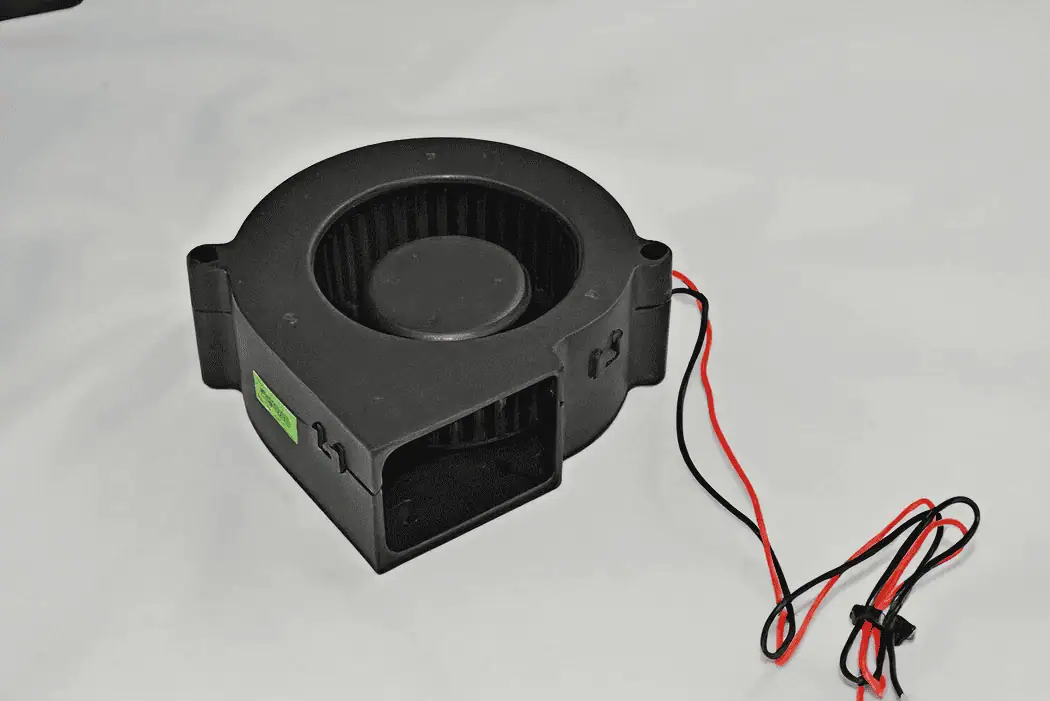
These devices pull air into the center of the impeller housing and expel it at a 90-degree angle. The impeller design increases static pressure as air is redirected and expelled through the exhaust port. This design generates significantly higher static pressure than axial models. System designers specify blowers to push air through restrictive ducting, dense heat sinks, and tightly packed electronic assemblies. The concentrated exhaust stream effectively targets specific high-heat components.
Ruggedization by Rating: The Role of IP Ratings in Thermal Management

A powerful fan fails quickly if environmental contamination breaches the motor housing. Evaluating a fan’s airflow capacity must align with its physical ability to survive the application environment. Electronic components operating in harsh environments, such as desert solar farms or maritime drilling rigs, face constant exposure to dust and water. Implementing proper thermal management means selecting hardware designed to withstand these exact conditions.
The International Electrotechnical Commission established Ingress Protection (IP) ratings to classify a component’s defense against foreign bodies. The two-digit IP code details exact mechanical resilience. The first digit represents defense against solid particles, scaling from 0 to 6. The second digit measures resistance to liquids, with a scale from 0 to 9.
Calculating Needs: A Practical Guide to CFM Calculations
Moving from high-level component selection to actual thermal math requires a structured methodology. Engineers must determine the exact Cubic Feet per Minute (CFM) required to keep an application within safe temperature boundaries. Proper CFM calculations prevent over-specifying hardware and stop dangerous heat accumulation. Underspecifying airflow leads to thermal throttling, component degradation, and premature system failure.
Execute these precise steps to calculate the necessary airflow for your industrial systems:

Determine total heat dissipation

Establish maximum desired internal temperature

Determine maximum ambient temperature

Calculate the temperature differential (ΔT)

Apply the standard thermal formula

Advanced Thermal Solutions in a Demanding World: The Marsh Advantage
Precise thermal management dictates the survival of modern industrial systems. A failure in heat extraction directly compromises expensive machinery in high-consequence industries. Selecting the correct axial fan or centrifugal blower establishes the foundation for effective cooling. Matching the IP rating to the environmental hazard stops premature mechanical degradation. Executing exact CFM calculations guarantees the hardware moves enough air to defeat peak thermal loads.
Marsh Electronics acts as a dedicated technical resource for your engineering team. Marsh Electronics stocks axial fans, centrifugal blowers, and IP-rated thermal components from authorized manufacturers, including Sanyo Denki, Orion Fans, Mechatronics, Cooltron. Field application engineers support component selection, CFM calculations, and impedance analysis, reducing the time your design team spends on thermal sourcing.
To discuss component selection or get support with CFM calculations for your application, contact a Marsh Electronics field application engineer.