


The heavy equipment and off-road transportation sectors, including agriculture, construction, and mining, are undergoing a massive technological shift. Since 1935, Marsh Electronics has supplied application-grade electronic components to the heavy equipment sector. We deliver the specialized engineering support and customized supply chain solutions required to transition heavy machinery to electrification and digital control



Learn more about ruggedizing electronics for off-road vehicles through robust communication networks, hardened human-machine interfaces (HMIs), and specialized power systems.
Off-road environments impose high-intensity stressors on electronic systems. A combine harvester vibrates at amplitudes that would destroy standard components within hours. Mining trucks operate in thick dust concentrations that easily infiltrate unsealed enclosures. Construction equipment must also endure extreme temperature swings, ranging from -40°C in Arctic sites to 50°C in desert operations. When a $500,000 machine stops due to a failed $50 sensor, the downtime costs exceed the cost of the component by several orders of magnitude.
Fleet managers and original equipment manufacturers (OEMs) require components designed specifically for these punishing conditions. To address these demands, this guide examines the technical requirements of three essential systems in which standard industrial components often fail, setting the stage for a deeper look at communication, operator interface, and power system challenges.
Connecting the Off-Road Vehicle: CAN Bus Integration and Robust Communication
Modern off-road vehicles use interconnected systems. Engine controls communicate with the transmission and interact with hydraulic components. Navigation systems must synchronize precisely with steering controls. The Controller Area Network (CAN bus) protocol facilitates real-time data exchange among these nodes; however, a single physical-layer connection failure can disrupt the entire network, stranding the machine in the field.
When a CAN Bus node loses signal, the entire network can fault, bringing the machine to a standstill. Agricultural equipment during a narrow harvest window cannot tolerate these communication failures. Similarly, construction projects under fixed-penalty contracts cannot absorb the lost productivity resulting from failed connectors.
Off-road environments generate significant electrical and mechanical noise, degrading CAN Bus signal integrity. Engine ignition generates transient voltage spikes. Hydraulic solenoids produce electromagnetic interference (EMI). Chassis flex from uneven terrain stresses connector pins, and continuous vibration loosens crimped terminals. These conditions demand specialized components, including:
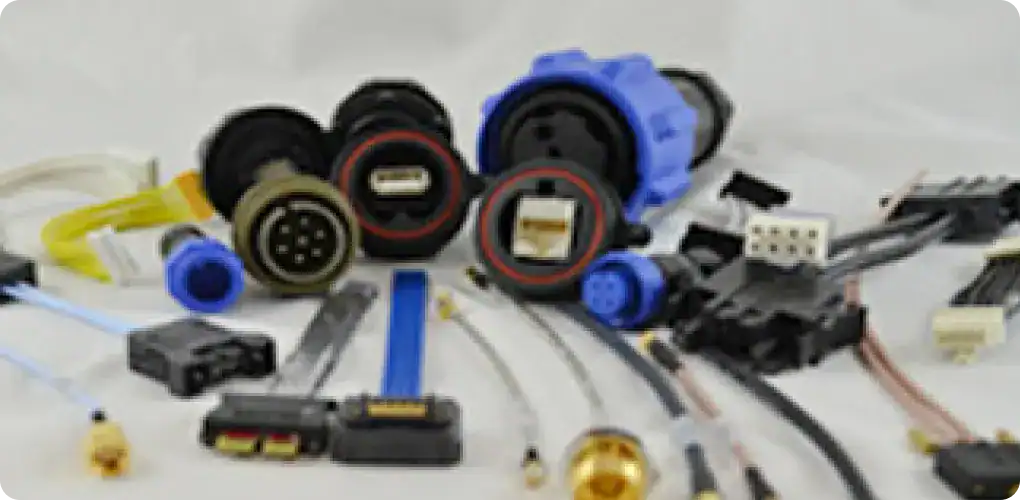
Ruggedized connectors
Engineered with positive locking mechanisms to prevent decoupling under high vibration. Gold-plated contacts prevent oxidation from moisture or salt spray, while shielded shell designs attenuate EMI, and high-pressure seals achieve IP67/IP69K ratings.

Shielded cabling
Engineered with positive locking mechanisms to prevent decoupling under high vibration. Gold-plated contacts prevent oxidation from moisture or salt spray, while shielded shell designs attenuate EMI, and high-pressure seals achieve IP67/IP69K ratings.
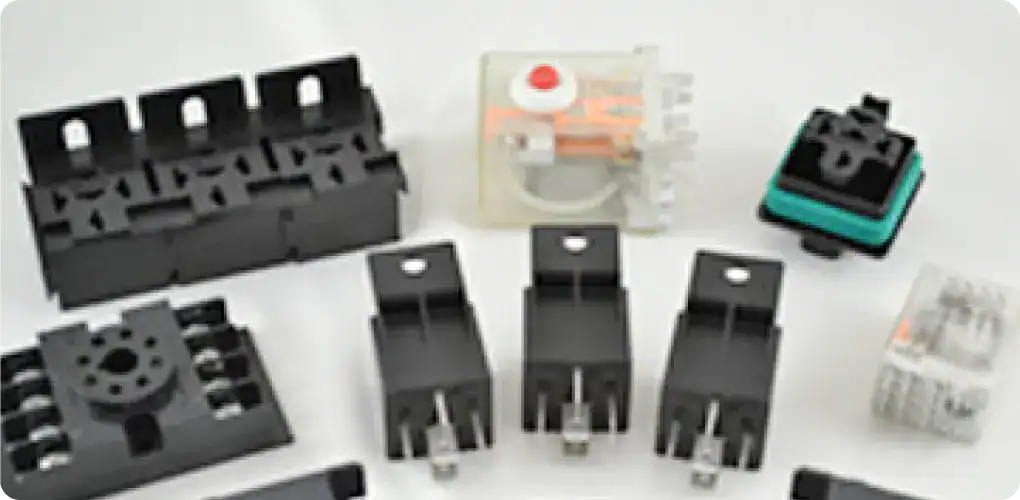
Transient protection parts
Engineered with positive locking mechanisms to prevent decoupling under high vibration. Gold-plated contacts prevent oxidation from moisture or salt spray, while shielded shell designs attenuate EMI, and high-pressure seals achieve IP67/IP69K ratings.
OEMs building new machines must use parts that meet the car industry standards for blocking electrical noise. SAE J1939 demonstrates that CAN Bus components are designed for heavy vehicles. Our engineers help select connectors, cables, and protective components to keep signals clear in challenging environments.

The Human-Machine Interface: Hardened HMIs for the Operator
Operator interfaces for safety-critical functions at job sites, such as an excavator’s joystick and a mining truck’s brake pedal, must be absolutely reliable to prevent catastrophic accidents. Common issues in off-road environments include breakdowns caused by dust and rust, vibration that can damage connections, extreme temperature fluctuations that affect touchscreens, and the difficulty operators face when using small switches with thick gloves.
To guarantee field reliability, ruggedized HMI components undergo rigorous military and industrial environmental testing protocols, including:
- MIL-STD-810 compliance. Validates component resilience against extreme mechanical shock, multi-axis vibration, and thermal shock by simulating years of field exposure.
- Advanced sealing standards. IP65 and IP67 ratings prevent dust and moisture ingress. Sealed switches often utilize elastomeric boots over mechanical contacts. Display modules use optically bonded glass to prevent condensation between layers. This construction extends the service life of agricultural equipment operating in heavy dew and of construction machinery working in the rain.
- Tactile feedback and ergonomics. Strong physical feedback is important when wearing gloves. Tough switches give a clear click or feel when used, so operators know they worked without looking. Heavy-use joysticks can withstand side forces and always return to center after extended use.
The difference between standard industrial parts and genuinely ruggedized HMIs appears in warranty claims and field failure rates. OEMs that want to reduce long-term costs must choose switches, joysticks, and display modules that are tested in the actual operating environment. We partner with leading manufacturers to source HMI systems specifically validated for off-road use.
Powering the Machine: Overcoming Electrification Challenges
Switching to electric power is the biggest change for off-road machines since the advent of hydraulics. Battery-powered systems remove the need for diesel, and hybrids combine batteries with electric motors. High-voltage systems are replacing the old 12V and 24V setups.
This transition creates component requirements that standard automotive suppliers often cannot meet. A passenger electric vehicle (EV) operates primarily on paved roads. In contrast, an electric mining truck navigates haul roads with two-foot ruts. A battery-electric wheel loader experiences severe shock loads whenever the bucket edge contacts solid rock. The vibration and thermal cycling profiles differ by orders of magnitude from those required by highway standards.

High-power connectors

Battery management systems (BMS)

Power conversion modules
Standard automotive-grade components frequently fail under the severe duty cycles of heavy equipment. A large-tonnage excavator subjects components to continuous, high-amplitude mechanical shock that exceeds typical passenger EV testing envelopes.
Marsh Electronics sources specialized power distribution components from tier-one manufacturers vetted for demanding defense and rail transit applications
Your Partner for Ruggedizing Electronics for Off-Road Vehicles
Standard industrial electronics are not engineered for the rigours of the off-road environment. The intense shock, vibration, and contamination these machines experience require purpose-built solutions. For successful digital controls and electrification, focus on three key takeaways: robust communication networks, hardened human-machine interfaces (HMIs), and specialized power systems.
- Robust communication networks. utilize connectors, cabling, and transient protection designed for electrically noisy and mechanically hostile conditions.
- Hardened operator interfaces. meet MIL-STD testing and IP sealing standards to ensure safety and performance in the field.
- Specialized power systems. featuring high-current connectors and thermal management, are engineered for the specific duty cycles of heavy equipment.
For over 90 years, Marsh Electronics has partnered with OEMs, offering rugged machinery expertise and solutions. Choose experts who grasp off-road challenges for robust communication, HMI, and power systems. We provide a broad range of rugged components from top manufacturers and value-added services via MarVac Assemblies to simplify your supply chain. Trust us to specify dependable electronics that keep your machines running.

Get a complete overview of the specialized rugged components we support. Download our Transportation & Off-Road Line Card to explore solutions for your next platform.
Contact Us